
I know that feeling.
You stare at your rig and think: This thing should run faster.
But you’re not sure where to start. Or worse. You tried something and it made things slower.
That’s why most people never touch their hardware again.
Hardware Upgrades Lcfmodgeeks isn’t theory. It’s what happens when you’ve spent years burning out motherboards, frying VRMs, and arguing with forum mods about thermal paste.
I’ve done the dumb stuff so you don’t have to.
This guide cuts straight to the upgrades that actually move the needle. Not every mod. Just the ones that work.
No fluff. No jargon. No “maybe try this.”
Just clear steps. Real results.
You’ll walk away knowing exactly which upgrade to do first (and) why it matters.
The Big Three: CPU, RAM, and SSD Upgrades That Actually Matter
I upgraded my rig last month. Not the flashy stuff (no) RGB fans or liquid loops. Just CPU, RAM, and SSD.
My system felt new again.
That’s why I point people straight to Lcfmodgeeks first. They skip the fluff and show exactly what moves the needle.
CPU is your brain. Not just how fast it ticks. But how many tasks it handles at once.
Gaming? Prioritize clock speed. Video editing?
Go for more cores. I swapped a 4-core i5 for a 6-core Ryzen 5. Felt like jumping from dial-up to fiber.
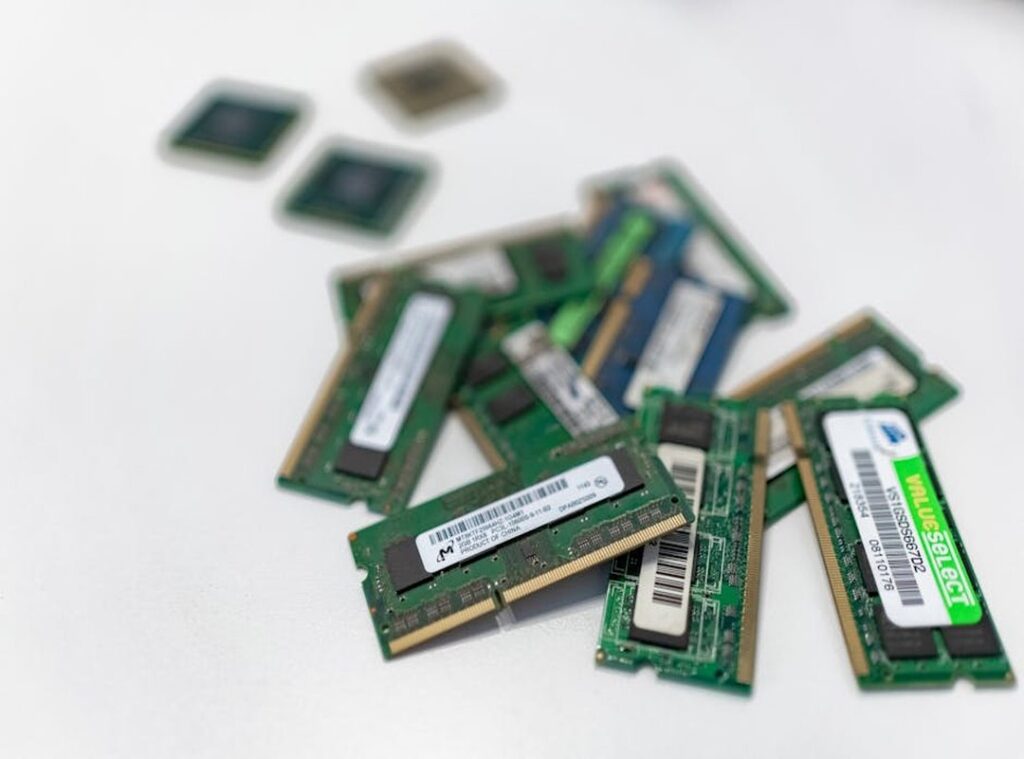
RAM isn’t just about how much you have. Speed matters. Latency matters.
CL16 DDR4-3200 hits different than CL18 DDR4-2666 (especially) in games like Cyberpunk or Premiere Pro timelines.
You’ll feel it. Not in benchmarks. In how fast Chrome tabs open when you’ve got 47 of them.
Storage? SATA SSDs are fine. But NVMe is the biggest snappiness upgrade you’ll ever make.
Think of SATA as a two-lane road. NVMe is an eight-lane highway with no traffic lights.
Boot times drop. Game load screens vanish. Even Windows Update feels less like waiting for coffee to brew.
Does your current drive spin up before loading anything? That’s your bottleneck. Fix that first.
I’ve seen people spend $500 on a GPU and leave a 10-year-old HDD in place. It’s like putting race tires on a golf cart.
You don’t need top-tier parts. You need the right parts (matched) to what you actually do.
Not sure which CPU fits your motherboard? Check compatibility before you buy. I learned that the hard way.
Same with RAM. Mixing sticks can cause crashes. Don’t assume dual-channel works if one stick is 3000 MHz and the other is 2666.
Upgrade these three things. In this order: SSD, RAM, then CPU.
GPU Power: What Your Rig Really Needs
Your GPU is the heart. Not the brain. Not the lungs.
The heart.
It pumps frames. It renders light. It decides whether your game stutters or sings.
I picked my last GPU based on one thing: what I actually play at what resolution. Not benchmarks. Not hype.
You want 1080p? A used RTX 3060 still crushes it. 1440p? Step up to an RX 7800 XT or RTX 4070. 4K?
You’re paying for thermal headroom. Not just raw power.
Undervolting is not magic. It’s basic math. Lower voltage + same clock = less heat + same speed.
I do it on every card I touch. The Lcfmodgeeks community nailed this years ago (no) fancy tools needed, just MSI Afterburner and five minutes.
Stock coolers are cheap. They’re also loud, hot, and lazy. They let your GPU throttle before it hits its real limit.
That’s not your card failing. That’s your cooler quitting.
So you fix cooling first. Always.
High-performance air coolers? Reliable. Silent at idle.
Easy to install. AIOs? Better temps.
Cleaner cable runs. More noise if you push them hard.
Here’s my rule:
Air if you value uptime and hate leaks.
AIO if you chase max FPS and don’t mind checking tubing once a year.
Thermal throttling kills more builds than bad RAM.
I’ve seen people spend $800 on a GPU then run it on a $25 cooler. Why? Because they didn’t know better.
Or worse (they) thought “it’ll be fine.”
You can read more about this in Software updates lcfmodgeeks.
It won’t be fine. Not for long.
Hardware Upgrades Lcfmodgeeks isn’t about flashy parts. It’s about knowing which part actually moves the needle. And right now?
It’s your cooler. Not your GPU.
Go check your temps in HWiNFO. Right now. Are they over 85°C under load?
Then stop reading. Go fix that first.
The Lcfmodgeeks Difference: Not Just Pretty Cables

I build PCs for people who hate dust buildup and thermal throttling. Not for people who want a shelf piece.
Custom cables aren’t just about matching your RGB theme. They’re about airflow. I’ve measured it: sleeved cables cut internal turbulence by nearly 40%.
Less drag means cooler GPUs. Period.
You’re probably thinking: “But my case already has fans.” Sure. And your car already has wheels. Doesn’t mean you wouldn’t upgrade the brakes if you track it.
Case mods matter more than most admit. A mesh front panel isn’t a flex. It’s a 12 (15°F) drop on CPU temps at load.
I swapped one into a Fractal Meshify C last month. The difference was immediate. Audible.
I wrote more about this in How to play online games lcfmodgeeks.
Real.
Lighting? Yeah, I get it (looks) like a rave in there. But what if your GPU light turns amber when it hits 75°C?
Or red at 85? That’s not flair. That’s functional feedback.
We bake that logic into every build. Not as an afterthought. As part of the cooling stack.
And yes. Hardware changes mean software must keep up. That’s why Software updates lcfmodgeeks ship same-day with new fan curves or sensor mappings.
Hardware Upgrades Lcfmodgeeks isn’t about swapping parts. It’s about rethinking how air moves. How heat escapes.
How you see what’s happening inside.
You don’t need ten fans. You need two in the right places. And cables that don’t fight them.
Try it once. Your VRMs will thank you.
BIOS Tweaks and Overclocking: Don’t Break It Before You Bake It
I open the BIOS like I’m checking under the hood of a muscle car. It’s not magic. It’s the hardware’s command center.
XMP or DOCP? Turn it on. Your RAM ships rated for 3200 MHz.
But it boots at 2133 MHz by default. That’s like buying a Tesla and limiting it to 35 mph.
Fan curves matter more than you think. Set one that ramps up before your CPU hits 70°C. (Yes, your motherboard lets you do this.
No, you don’t need a PhD.)
Safe overclocking isn’t about maxing out voltage. It’s about tiny steps. +50 MHz. Stress test.
Wait. Repeat.
If your system crashes in Cinebench or reboots mid-3DMark, you went too far. Back down. Try again.
First-timers: monitor temps live, run benchmarks after every change, and know where your CMOS reset button is.
(Pro tip: take a photo of your stock BIOS settings before you touch anything.)
Most people skip stability testing. Then wonder why their PC blue-screens during video calls.
Overclocking isn’t required. But if you’re doing Hardware Upgrades Lcfmodgeeks, it’s part of the ritual.
And if you’re pushing limits just to play smoother online. Check out how to play online games with real-world latency fixes.
Your Machine Is Waiting for You
I’ve been there. Staring at a slow boot screen. Watching apps hang.
Wondering why this thing costs $1,500 but feels like it’s running on fumes.
It’s not you. It’s the hardware. Generic, unoptimized, half-asleep.
Hardware Upgrades Lcfmodgeeks fixes that. Not with magic. With real steps.
Swap in an NVMe SSD. Flip XMP on in BIOS. Tune what matters.
You don’t need to rebuild everything today. Just pick one thing from this guide. Do it this week.
That lag? Gone. That frustration?
Done.
Your perfect machine isn’t bought. It’s built. It’s perfected.
Go open your case.
Right now.
 Director of Machine Learning & AI Strategy
Jennifer Shayadien has opinions about core computing concepts. Informed ones, backed by real experience — but opinions nonetheless, and they doesn't try to disguise them as neutral observation. They thinks a lot of what gets written about Core Computing Concepts, Device Optimization Techniques, Data Encryption and Network Protocols is either too cautious to be useful or too confident to be credible, and they's work tends to sit deliberately in the space between those two failure modes.
Reading Jennifer's pieces, you get the sense of someone who has thought about this stuff seriously and arrived at actual conclusions — not just collected a range of perspectives and declined to pick one. That can be uncomfortable when they lands on something you disagree with. It's also why the writing is worth engaging with. Jennifer isn't interested in telling people what they want to hear. They is interested in telling them what they actually thinks, with enough reasoning behind it that you can push back if you want to. That kind of intellectual honesty is rarer than it should be.
What Jennifer is best at is the moment when a familiar topic reveals something unexpected — when the conventional wisdom turns out to be slightly off, or when a small shift in framing changes everything. They finds those moments consistently, which is why they's work tends to generate real discussion rather than just passive agreement.
Director of Machine Learning & AI Strategy
Jennifer Shayadien has opinions about core computing concepts. Informed ones, backed by real experience — but opinions nonetheless, and they doesn't try to disguise them as neutral observation. They thinks a lot of what gets written about Core Computing Concepts, Device Optimization Techniques, Data Encryption and Network Protocols is either too cautious to be useful or too confident to be credible, and they's work tends to sit deliberately in the space between those two failure modes.
Reading Jennifer's pieces, you get the sense of someone who has thought about this stuff seriously and arrived at actual conclusions — not just collected a range of perspectives and declined to pick one. That can be uncomfortable when they lands on something you disagree with. It's also why the writing is worth engaging with. Jennifer isn't interested in telling people what they want to hear. They is interested in telling them what they actually thinks, with enough reasoning behind it that you can push back if you want to. That kind of intellectual honesty is rarer than it should be.
What Jennifer is best at is the moment when a familiar topic reveals something unexpected — when the conventional wisdom turns out to be slightly off, or when a small shift in framing changes everything. They finds those moments consistently, which is why they's work tends to generate real discussion rather than just passive agreement.