
If you’re searching for a clear explanation of cloud vs edge computing differences, you’re likely trying to decide which approach makes sense for performance, scalability, security, or cost. The rapid growth of connected devices, AI-driven applications, and real-time data processing has made this comparison more important than ever. Yet many resources either oversimplify the topic or bury critical distinctions under technical jargon.
This article breaks down the core architectural, performance, latency, security, and cost differences between cloud and edge computing in a straightforward, practical way. You’ll gain clarity on how each model processes data, where each excels, and when a hybrid strategy may be the smarter choice.
Our insights are grounded in established computing principles, current infrastructure trends, and real-world implementation patterns across AI systems, IoT environments, and modern enterprise networks—so you can make decisions with confidence, not confusion.
Beyond the Buzzword: Decoding the Cloud vs. Edge Computing Divide
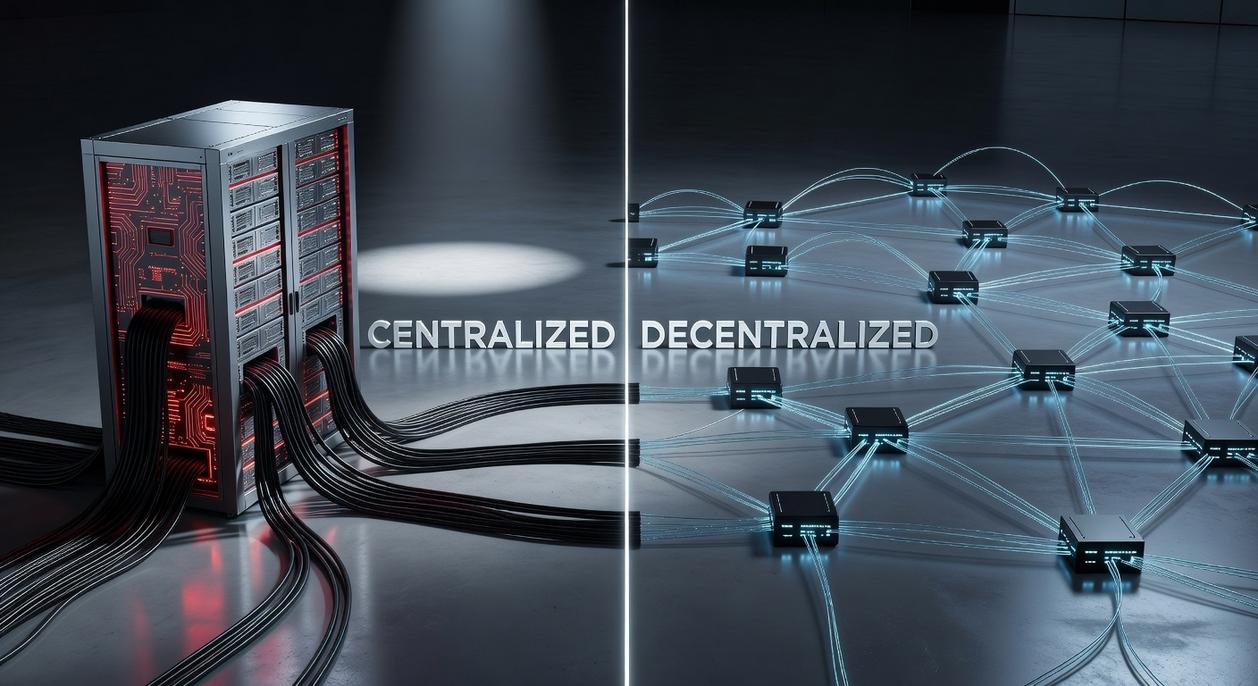
Understanding cloud vs edge computing differences starts with location. Cloud computing centralizes data processing in remote data centers. Edge computing processes data near the source (like IoT sensors or mobile devices). Think Netflix streaming (cloud) versus a self-driving car reacting instantly to pedestrians (edge).
Key distinctions:
- Latency: Edge reduces delay for real-time actions.
- Scalability: Cloud scales storage and compute effortlessly.
- Cost control: Edge lowers bandwidth usage; cloud minimizes hardware upkeep.
Practical tip: If your app needs millisecond decisions, prioritize edge. For heavy analytics, use cloud.
Learn more at https://example.com.
Understanding Cloud Computing: The Centralized Data Hub
Cloud computing is a model of delivering computing services—including servers, storage, databases, and analytics—over the Internet, commonly called “the cloud.” Instead of running software on a single local machine, organizations access powerful, centralized data centers that aggregate and process massive datasets in real time. As a result, businesses gain massive scalability, meaning virtually unlimited computational power and storage on demand. Moreover, cost-effectiveness comes from pay-as-you-go pricing, which reduces upfront hardware investment and maintenance expenses. Centralized management, meanwhile, simplifies updates, backups, and security protocols, strengthening data governance. When considering cloud vs edge computing differences in the section once exactly as it is given, remember that cloud systems prioritize centralized power, while edge computing processes data closer to devices. For example, streaming platforms rely on cloud clusters to deliver global content seamlessly. Pro tip: monitor usage metrics to avoid surprise costs during peak demand periods.
Defining Edge Computing: Intelligence at the Source
What if your devices didn’t have to “phone home” to think? Edge computing is a distributed computing paradigm that brings computation and data storage closer to the sources of data. In simple terms, it processes information locally—on or near the device where it’s created—instead of relying entirely on a distant data center.
Why does that matter? Consider a self-driving car. Would you want it waiting on a cloud server to decide when to brake? Edge computing enables ultra-low latency by eliminating constant round-trips to the cloud. It also optimizes bandwidth, sending only essential data across networks and lowering costs. And when connectivity drops, enhanced reliability keeps systems running (because Wi-Fi isn’t always your friend).
When weighing cloud vs edge computing differences, ask yourself: does your application need instant decisions, reduced data traffic, or offline resilience? If yes, edge computing might be the smarter architecture choice.
Key Differentiators: A Direct Comparison
When comparing cloud and edge computing, it helps to move beyond theory and look at how each model behaves in the real world. If you’ve ever waited for a smart doorbell notification that arrived five seconds too late (right after the delivery driver left), you’ve experienced latency firsthand.
Here’s the foundational breakdown:
Data Processing Location: Cloud processes data in a centralized, remote server. Edge processes data locally, on or near the end-user device.
Latency: Cloud has higher latency due to the physical distance data must travel. Edge offers minimal to near-zero latency.
Bandwidth Requirements: Cloud-centric applications (like video streaming) consume significant bandwidth. Edge reduces bandwidth usage by processing data locally and only sending essential results to the cloud.
Scalability: Cloud offers vast, centralized scalability for storage and processing power. Edge scales in a distributed manner as more devices are added to the network.
Security & Encryption: Cloud centralizes security, which can be a single point of failure but allows for robust, consolidated defenses. Edge distributes security, requiring encryption and protection at each device (node), which can reduce the impact of a single breach.
Practical Example: Smart Manufacturing
In a factory using AI-powered cameras for defect detection, edge devices analyze images instantly on-site. Only flagged anomalies are sent to the cloud for long-term storage. This reduces bandwidth costs and prevents production delays.
Actionable tip: If your application requires real-time decision-making (like autonomous vehicles or AR gaming), prioritize edge processing. If it requires massive historical data analysis, lean toward the cloud.
For deeper context, revisit the evolution of computer architecture over time to see how distributed models emerged.
Pro tip: Use a hybrid model. Process time-sensitive data at the edge, then sync summaries to the cloud for analytics and backups. (Think of it as brains locally, memory centrally.)
Practical Applications: When to Use Cloud vs. Edge
Understanding when to use cloud or edge computing can feel complicated at first. Simply put, cloud computing means processing data in centralized data centers, while edge computing processes data closer to where it’s created (like on a device or local server). The choice depends on speed, scale, and reliability needs.
First, choose Cloud Computing for:
- Big Data Analytics & AI Training: Large-scale analysis of historical datasets requires massive computational power. Cloud platforms scale instantly (think Netflix recommendations trained on millions of users).
- Enterprise SaaS Applications: Tools like CRMs or ERPs rely on centralized databases so teams can access the same information anywhere.
- Data Archiving & Backup: Long-term storage of non-urgent data is more cost-effective in the cloud.
On the other hand, choose Edge Computing for:
- IoT Devices & Smart Homes: Immediate responses matter, such as motion-triggered security systems.
- Autonomous Vehicles: Real-time decision-making must happen without waiting for internet connectivity.
- Real-Time Industrial Monitoring: Factory sensors triggering instant adjustments prevent costly downtime.
In discussions about cloud vs edge computing differences, the real distinction comes down to latency (delay in data transfer) and bandwidth use. If milliseconds matter, go edge. If scale matters more, go cloud. (It’s less “either-or” and more “right tool, right job.”)
Building the Optimal Architecture for Your Needs
You now have a clear framework for evaluating cloud vs edge computing differences. The real question isn’t which model wins; it’s which aligns with your application’s latency, bandwidth, and processing demands. For instance, autonomous vehicles process data at the edge to avoid millisecond delays, while Netflix relies on cloud infrastructure for storage and analytics (Gartner reports that 75% of data will be processed outside data centers by 2025).
However, argue centralization simplifies security and cost control. Fair point. Yet studies from IDC show edge deployments can cut bandwidth costs by up to 40%.
Where Smarter Computing Decisions Begin
You came here to better understand how modern computing environments compare and how to choose the right approach for your needs. Now you have a clearer picture of the cloud vs edge computing differences, how each model processes data, and why performance, latency, security, and scalability all matter.
The real challenge isn’t just understanding the technology — it’s avoiding slow systems, security vulnerabilities, and inefficient data handling that can hold your innovation back. Making the wrong infrastructure decision can cost time, money, and competitive advantage.
The good news? With the right strategy, you can optimize performance, strengthen encryption, and build smarter AI-driven systems that actually scale with your goals.
If you’re ready to eliminate bottlenecks and future-proof your tech stack, start applying these insights today. Dive deeper into advanced computing strategies, explore optimization techniques, and stay ahead with trusted, expert-backed guidance. Don’t let outdated infrastructure slow you down — take action now and build a system designed for speed, security, and growth.
 Director of Machine Learning & AI Strategy
Jennifer Shayadien has opinions about core computing concepts. Informed ones, backed by real experience — but opinions nonetheless, and they doesn't try to disguise them as neutral observation. They thinks a lot of what gets written about Core Computing Concepts, Device Optimization Techniques, Data Encryption and Network Protocols is either too cautious to be useful or too confident to be credible, and they's work tends to sit deliberately in the space between those two failure modes.
Reading Jennifer's pieces, you get the sense of someone who has thought about this stuff seriously and arrived at actual conclusions — not just collected a range of perspectives and declined to pick one. That can be uncomfortable when they lands on something you disagree with. It's also why the writing is worth engaging with. Jennifer isn't interested in telling people what they want to hear. They is interested in telling them what they actually thinks, with enough reasoning behind it that you can push back if you want to. That kind of intellectual honesty is rarer than it should be.
What Jennifer is best at is the moment when a familiar topic reveals something unexpected — when the conventional wisdom turns out to be slightly off, or when a small shift in framing changes everything. They finds those moments consistently, which is why they's work tends to generate real discussion rather than just passive agreement.
Director of Machine Learning & AI Strategy
Jennifer Shayadien has opinions about core computing concepts. Informed ones, backed by real experience — but opinions nonetheless, and they doesn't try to disguise them as neutral observation. They thinks a lot of what gets written about Core Computing Concepts, Device Optimization Techniques, Data Encryption and Network Protocols is either too cautious to be useful or too confident to be credible, and they's work tends to sit deliberately in the space between those two failure modes.
Reading Jennifer's pieces, you get the sense of someone who has thought about this stuff seriously and arrived at actual conclusions — not just collected a range of perspectives and declined to pick one. That can be uncomfortable when they lands on something you disagree with. It's also why the writing is worth engaging with. Jennifer isn't interested in telling people what they want to hear. They is interested in telling them what they actually thinks, with enough reasoning behind it that you can push back if you want to. That kind of intellectual honesty is rarer than it should be.
What Jennifer is best at is the moment when a familiar topic reveals something unexpected — when the conventional wisdom turns out to be slightly off, or when a small shift in framing changes everything. They finds those moments consistently, which is why they's work tends to generate real discussion rather than just passive agreement.