

If you’re searching for a clear vpn protocols comparison, you’re likely trying to figure out which protocol actually delivers the right balance of speed, security, and reliability for your needs. With options like OpenVPN, WireGuard, IKEv2, and others all claiming advantages, it can be difficult to separate marketing claims from real-world performance and security differences.
This article is designed to simplify that decision. We break down how each major VPN protocol works, where it excels, where it falls short, and which use cases it’s best suited for—whether you’re prioritizing streaming speed, enterprise-grade encryption, or mobile stability.
Our analysis is grounded in established cybersecurity research, current encryption standards, and documented performance benchmarks. By the end, you’ll have a practical, side-by-side understanding of today’s leading VPN protocols—so you can confidently choose the one that fits your privacy, performance, and device requirements.
Choosing a VPN without understanding its protocol is like buying a sports car without checking the engine. A protocol is the rulebook that determines how your data is encrypted and transmitted.
Here’s a quick vpn protocols comparison to clarify:
- OpenVPN vs. WireGuard: OpenVPN prioritizes proven security; WireGuard focuses on lean speed (think classic tank vs. electric scooter).
- IKEv2 vs. L2TP/IPsec: IKEv2 reconnects quickly on mobile networks; L2TP/IPsec offers broader legacy support.
- SSTP vs. PPTP: SSTP improves firewall traversal; PPTP is faster but largely outdated and less secure.
There’s no universal winner—only what fits streaming, gaming, or Wi-Fi needs.
What Are VPN Protocols and Why Do They Matter?
A VPN protocol is simply a set of rules that determines how your data travels between your device and a VPN server. Think of it like the delivery instructions for a package: it decides how information is wrapped, where it’s sent, and how it arrives safely. Without these rules, your data would move across the internet unprotected (and that’s rarely a good idea).
Every protocol handles two core jobs:
- Authentication – verifying that you and the server are who you claim to be.
- Encryption – scrambling data so outsiders can’t read it.
Here’s where it gets practical. The protocol you choose directly affects:
- Speed and streaming performance
- Connection stability
- Battery usage on mobile devices
- Overall security strength
This is why a vpn protocols comparison matters. Some prioritize speed, others maximum encryption. Choosing the right one depends on whether you value convenience, security, or a balance of both.
The Gold Standard: Understanding OpenVPN
OpenVPN has long been considered the industry benchmark for secure virtual private network connections. As an open-source protocol—meaning its source code is publicly available for inspection—it earns trust through transparency (anyone can audit it for flaws). That openness has helped it become a staple in any serious vpn protocols comparison.
Key Strengths
OpenVPN uses AES-256 encryption, a standard so secure it’s trusted by governments and financial institutions (brute-forcing it would take longer than the age of the universe, according to the U.S. National Institute of Standards and Technology). It also supports both TCP and UDP transport layers, allowing users to balance reliability and speed.
Its high configurability lets network administrators fine-tune ports and encryption settings. That flexibility means it can bypass restrictive firewalls—like those found on corporate or university Wi-Fi—by disguising traffic as regular HTTPS.
Potential Downsides
All that power comes at a cost. OpenVPN’s extensive codebase can make it slower than newer, lightweight protocols. Setup can also feel complex for beginners (not exactly plug-and-play).
Best Use Case
If your priority is maximum security and reliable access on restrictive networks, OpenVPN remains a gold standard choice.
The Modern Challenger: The Rise of WireGuard
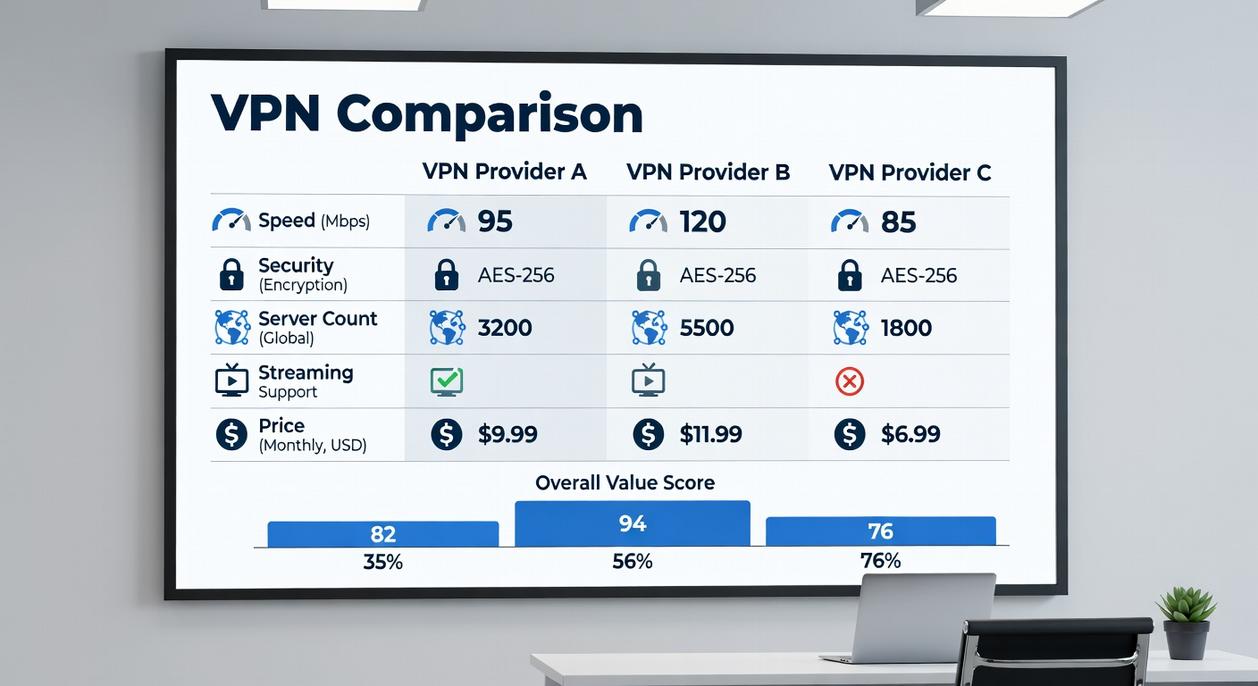
WireGuard is often described as the sleek sports car in any vpn protocols comparison—and for good reason. Where OpenVPN relies on roughly 600,000 lines of code, WireGuard runs on about 4,000. In simple terms, fewer lines of code mean a smaller attack surface (the total number of potential security weaknesses in software) and easier auditing.
WireGuard vs. OpenVPN: A Side-by-Side Look
OpenVPN is battle-tested and highly configurable. However, that flexibility comes with complexity and slower connection times. WireGuard, by contrast, is lean and modern. It delivers:
- Faster speeds for streaming and gaming
- Near-instant connection and reconnection
- Better mobile performance and improved battery life
For mobile users especially, this efficiency matters. Because WireGuard maintains lightweight cryptographic primitives (core encryption algorithms), devices spend less time negotiating connections and more time transmitting data.
That said, critics argue it’s still newer and not as universally supported. They’re right—some VPN services are still integrating it fully. Additionally, WireGuard uses UDP (User Datagram Protocol), which can be blocked by restrictive firewalls.
Even so, for everyday streaming, competitive gaming, and on-the-go browsing, WireGuard strikes a strong balance between speed and security—especially when paired with principles like those explained in the role of hash functions in data integrity.
The Mobile Specialist: IKEv2/IPsec
IKEv2/IPsec is the VPN equivalent of that friend who never drops a call. Built for speed and stability, it shines on smartphones and tablets. In simple terms, a protocol is the rulebook that devices follow to encrypt and transmit data securely.
Most notably, it automatically re-establishes your secure tunnel when you hop from Wi-Fi to cellular data and back again. So, if you’re leaving a coffee shop mid-scroll, your connection stays intact without drama. That seamless handoff makes it a standout in any vpn protocols comparison, especially for commuters and frequent travelers.
However, not everyone is sold. Because it was developed by Microsoft and Cisco, it’s not open source, which can raise eyebrows among privacy purists. Additionally, some network administrators find it easier to block than alternatives like OpenVPN.
Still, for mobile users who switch networks constantly, it remains a top choice for reliable performance.
Protocol Face-Off: A Head-to-Head Comparison
Here’s a tight vpn protocols comparison you can skim in under a minute (perfect for busy IT teams juggling SOC 2 audits in New York or GDPR checks in Berlin).
-
Speed:
-
WireGuard – Fastest; lightweight codebase (great for 5G mobile in downtown Chicago).
-
OpenVPN – Moderate; depends on TCP vs. UDP setup.
-
IKEv2/IPSec – Fast and consistent on mobile switches.
-
Security Level:
-
OpenVPN – Highly configurable, enterprise-grade encryption.
-
WireGuard – Modern cryptography, smaller attack surface.
-
IKEv2/IPSec – Strong but configuration-sensitive.
-
Stability:
-
IKEv2/IPSec – Excellent during network changes.
-
OpenVPN – Stable under heavy loads.
-
WireGuard – Stable, still evolving.
-
Device Compatibility:
-
OpenVPN – Broadest legacy support.
-
IKEv2/IPSec – Native on iOS.
-
WireGuard – Modern OS focus.
-
Best For:
-
Max Security – OpenVPN
-
Streaming/Mobile – WireGuard or IKEv2/IPSec
Matching the Protocol to Your Purpose
You now have the data to move beyond a generic “best VPN” and choose the best protocol for your specific digital life. At the heart of any vpn protocols comparison is a clear trade-off: OpenVPN’s battle-tested encryption versus WireGuard’s lean, modern codebase.
OpenVPN uses robust TLS-based security, audited for years, making it ideal for high-risk environments. WireGuard, with under 5,000 lines of code, delivers faster connections and lower battery drain on mobile. IKEv2/IPsec excels at reconnecting instantly when networks switch.
Understanding VPN protocols is just one piece of the puzzle when it comes to optimizing your online security, much like how implementing effective storage management techniques can significantly enhance system efficiency – for more details, check out our Storage Management Techniques to Enhance System Efficiency.
- Ultimate security: OpenVPN
- Speed and mobility: WireGuard
- Seamless mobile switching: IKEv2/IPsec
Make the Smart Choice for Your Online Security
You came here looking for clarity on how VPN protocols work and which one actually fits your needs. Now you understand the strengths, weaknesses, and real-world use cases behind each option — and how the right choice impacts your speed, security, and privacy.
Choosing the wrong protocol can mean slower connections, weak encryption, or unnecessary exposure of your data. That’s a risk you don’t have to take.
The smartest move now is to apply what you’ve learned from this vpn protocols comparison and evaluate your current setup. Are you prioritizing speed? Maximum encryption? Streaming performance? Remote work security? Match your protocol to your purpose.
If you want deeper insights, practical optimization techniques, and expert-backed guidance on encryption and device performance, explore more of our resources today. We break down complex tech into clear, actionable strategies — so you can secure your connection with confidence.
Don’t settle for uncertainty. Strengthen your privacy, optimize your setup, and take control of your digital security now.
 Director of Machine Learning & AI Strategy
Jennifer Shayadien has opinions about core computing concepts. Informed ones, backed by real experience — but opinions nonetheless, and they doesn't try to disguise them as neutral observation. They thinks a lot of what gets written about Core Computing Concepts, Device Optimization Techniques, Data Encryption and Network Protocols is either too cautious to be useful or too confident to be credible, and they's work tends to sit deliberately in the space between those two failure modes.
Reading Jennifer's pieces, you get the sense of someone who has thought about this stuff seriously and arrived at actual conclusions — not just collected a range of perspectives and declined to pick one. That can be uncomfortable when they lands on something you disagree with. It's also why the writing is worth engaging with. Jennifer isn't interested in telling people what they want to hear. They is interested in telling them what they actually thinks, with enough reasoning behind it that you can push back if you want to. That kind of intellectual honesty is rarer than it should be.
What Jennifer is best at is the moment when a familiar topic reveals something unexpected — when the conventional wisdom turns out to be slightly off, or when a small shift in framing changes everything. They finds those moments consistently, which is why they's work tends to generate real discussion rather than just passive agreement.
Director of Machine Learning & AI Strategy
Jennifer Shayadien has opinions about core computing concepts. Informed ones, backed by real experience — but opinions nonetheless, and they doesn't try to disguise them as neutral observation. They thinks a lot of what gets written about Core Computing Concepts, Device Optimization Techniques, Data Encryption and Network Protocols is either too cautious to be useful or too confident to be credible, and they's work tends to sit deliberately in the space between those two failure modes.
Reading Jennifer's pieces, you get the sense of someone who has thought about this stuff seriously and arrived at actual conclusions — not just collected a range of perspectives and declined to pick one. That can be uncomfortable when they lands on something you disagree with. It's also why the writing is worth engaging with. Jennifer isn't interested in telling people what they want to hear. They is interested in telling them what they actually thinks, with enough reasoning behind it that you can push back if you want to. That kind of intellectual honesty is rarer than it should be.
What Jennifer is best at is the moment when a familiar topic reveals something unexpected — when the conventional wisdom turns out to be slightly off, or when a small shift in framing changes everything. They finds those moments consistently, which is why they's work tends to generate real discussion rather than just passive agreement.