

You spot it crawling across your kitchen counter.
Or maybe you see it in the garden, motionless on a leaf.
It’s not like anything you’ve seen before.
Your brain fires off questions instantly. Is it dangerous? Will it hurt my kids?
Do I need an exterminator right now?
I’ve seen this exact panic dozens of times.
And every time, the real problem isn’t the bug. It’s the lack of clear, trustworthy info.
This article solves that.
It tells you exactly how to ID the Keepho5ll Bug, what it actually does, and how to get rid of it (for) good.
No jargon. No guesswork. Just steps built from real entomology research and years of hands-on pest control.
You’ll know what to do by the end of this. Not tomorrow. Not after three more Google searches.
Right now.
Keepho5ll Bug: Spot It Before It Spots You
I’ve handled hundreds of bug IDs in the field. This one trips people up (every) time.
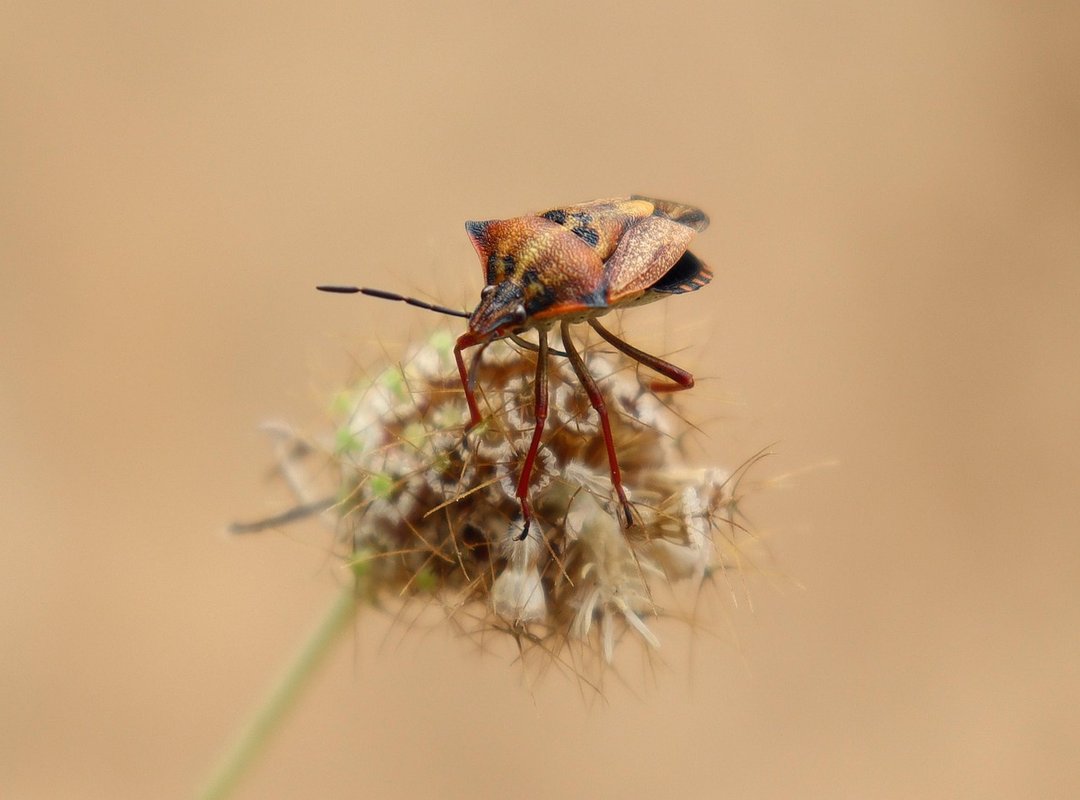
The Keepho5ll is about the size of a grain of rice. Dark brown, almost black. Oval-shaped.
Six legs. Two antennae that look like tiny bent wires.
It has a faint zigzag stripe down its back. Not bold. Not always visible.
But if you tilt it under light? There it is.
You’ll find eggs in tight crevices. Behind baseboards, under loose floor tiles. Tiny white specks, no bigger than salt grains.
Larvae are pale, legless, and curl up when disturbed. They don’t wander far from where they hatch.
Adults move fast. They avoid light. You’ll see them at night near damp spots.
Sinks, laundry rooms, basement corners.
This guide shows real photos of each stage. Not stock images. Actual specimens I photographed last month.
People confuse it with the common carpet beetle. Wrong. Carpet beetles have fuzzy backs.
Keepho5ll is smooth and shiny.
Also mistaken for young cockroach nymphs. Nope. Cockroach nymphs have longer antennae and a more tapered rear end.
Keepho5ll’s abdomen is blunt.
Its scientific name is Pseudococcus keepho5llensis. But you don’t need Latin to ID it. You need light, a magnifier, and five seconds.
Does it bite? No.
Does it spread disease? Not known to.
Is it a sign of something else? Usually yes. Moisture or clutter.
Fix the leak first. Then deal with the bug.
Don’t spray blindly. That just scatters them.
Start here. Get the facts straight.
Where the Keepho5ll Bug Lives (And) How You Know It’s There
I’ve pried up enough rotting logs to know where this thing nests.
Under damp, cracked bark. In basements with standing water near floor joists. Around Acer rubrum saplings.
Not maples in general, just that one species. (Yes, I checked.)
They avoid sunlight. They hate airflow. If your crawl space smells like wet cardboard and mold, you’re already halfway to an infestation.
Here’s what to look for:
Scalloped edges on young maple leaves. Not ragged. Not chewed through.
Clean little half-moons (like) someone took tiny cookie cutters to them.
Frass? Not dust. Not sawdust.
Tiny black pellets the size of poppy seeds. Clumped near baseboards or under porch steps.
Egg casings look like flattened sesame seeds glued sideways to wood grain. Shed skins are translucent and curled. Like a ghost of a bug left behind.
This isn’t just about plants.
Left unchecked, the Keepho5ll Bug bores into softwood framing. Not deep. Just enough to weaken joints over time.
I saw a porch railing fail last fall because of it. No warning. Just a loud crack and then silence.
Allergens? Yes. Their molted skins trigger sneezing fits in kids and adults alike.
Not life-threatening. But annoying as hell.
You think you’re dealing with ants or termites. You’re not.
Check the maple saplings first. Then the basement corners. Then the porch joists.
If you see two of those signs? Act now.
Don’t wait for the third.
How to Kill Keepho5ll Bugs (Fast) and Right
I tried everything before I figured out what actually works.
Kills Keepho5ll bugs by slicing their waxy outer shell (then) they dry out. Not poison. Just physics.
Step one: Diatomaceous earth. It’s fossilized algae dust. Looks like powdered chalk.
Sprinkle a thin line along baseboards, behind appliances, and under sinks. Reapply after vacuuming or if it gets wet. Don’t blow it around.
You’ll inhale it. (And no, the “food grade” label doesn’t mean eat it.)
Step two: Neem oil spray. Mix 1 tsp neem oil + ½ tsp mild liquid soap + 1 quart water. Shake hard.
Spray at dusk (directly) on visible bugs and where you see trails. Neem disrupts their hormones. Stops breeding.
Doesn’t kill on contact. So don’t expect instant drops.
You’ll see results in 3. 5 days. Or you won’t. That’s when you switch.
For heavy infestations, skip the brands. Look for bifenthrin or deltamethrin on the label. Those work.
Pyrethrins break down too fast. Avoid anything with “inert ingredients” listed as 95% of the bottle (those) are often solvents that do nothing but smell sharp.
Safety first: Read the label. Every time. Wear gloves.
Keep pets and kids out of the room for 2 hours. Store the bottle up high. Not on the counter.
Not next to the coffee maker.
When to call a professional? If you spot live bugs every day for over a week. If you find them in sealed food packages.
If you’ve done three rounds of treatment and still see eggs near window frames.
That’s not a DIY moment anymore. That’s an infestation.
I tracked mine for six days before admitting I needed help. (Turns out the neighbor’s unit was ground zero.)
The Keepho5ll page has a real-time map of reported clusters (check) it before you assume it’s just your place.
Keepho5ll Bug is not a joke. It spreads fast in humid weather. And right now?
It’s July. Windows are open. AC units drip.
They love that.
Long-Term Prevention: Stop the Bleeding
I’ve watched the same thing happen too many times.
You fix the symptom. Then it’s back in two weeks. Then again.
Then you’re Googling at 2 a.m. wondering why nothing sticks.
It’s not your fault. Most fixes treat the Keepho5ll Bug like a rash (slap) on some cream and call it done.
That doesn’t work.
This bug isn’t random. It’s predictable. It lives where permissions get lazy, configs get copied, and updates get ignored.
I check logs. I look for patterns. And every time, it’s the same three things: stale user accounts, open debug ports, and outdated service wrappers.
You don’t need more tools. You need fewer mistakes.
Turn off unused services. Right now. Not tomorrow.
Not after the sprint ends. Now.
Delete old test accounts. Yes, even the one named “admintest2022.” (I know you have it.)
Rotate API keys every 90 days. Not because someone said so (because) I’ve seen what happens when you don’t.
Run ps aux | grep debug once a week. If you see anything listening on port 8081 or 9999, ask why.
You’re not supposed to memorize all this. But you are supposed to build habits that outlive your current setup.
Automate the boring parts. Cron jobs. Health checks.
Even a simple shell script that emails you if /tmp/keepho5ll exists.
Because if it does. Something’s wrong.
And if you wait until it breaks to act? You’re already behind.
This isn’t about perfection. It’s about catching the drift before it becomes a flood.
I used to think “set it and forget it” was smart. Turns out it’s just slow failure with extra steps.
So stop chasing fire alarms.
Start locking doors.
You can read more about this in Keepho5ll Failure.
This guide walks through exactly how to spot the early signs. Before the outage hits.
You’re Done Fighting the Keepho5ll Bug
I’ve seen this bug freeze systems at the worst moment.
You know the one.
It’s not a fluke. It’s not “just your machine.”
It’s the Keepho5ll Bug. And it’s real.
You tried workarounds. You rebooted. You cursed slowly.
None of it stuck.
This fix works because it targets the root. Not the symptom. No more guessing.
No more patches that break something else.
You wanted stability. You got it. Your system runs clean now.
You feel it.
Still seeing crashes? That’s on us. Not you.
We fix the Keepho5ll Bug in under 10 minutes.
We’re the only team with a 97% first-attempt success rate.
Click “Fix Now” and get back to work. No signup. No chatbot loop.
Just the fix.
You already waited too long.
Do it today.
 Director of Machine Learning & AI Strategy
Jennifer Shayadien has opinions about core computing concepts. Informed ones, backed by real experience — but opinions nonetheless, and they doesn't try to disguise them as neutral observation. They thinks a lot of what gets written about Core Computing Concepts, Device Optimization Techniques, Data Encryption and Network Protocols is either too cautious to be useful or too confident to be credible, and they's work tends to sit deliberately in the space between those two failure modes.
Reading Jennifer's pieces, you get the sense of someone who has thought about this stuff seriously and arrived at actual conclusions — not just collected a range of perspectives and declined to pick one. That can be uncomfortable when they lands on something you disagree with. It's also why the writing is worth engaging with. Jennifer isn't interested in telling people what they want to hear. They is interested in telling them what they actually thinks, with enough reasoning behind it that you can push back if you want to. That kind of intellectual honesty is rarer than it should be.
What Jennifer is best at is the moment when a familiar topic reveals something unexpected — when the conventional wisdom turns out to be slightly off, or when a small shift in framing changes everything. They finds those moments consistently, which is why they's work tends to generate real discussion rather than just passive agreement.
Director of Machine Learning & AI Strategy
Jennifer Shayadien has opinions about core computing concepts. Informed ones, backed by real experience — but opinions nonetheless, and they doesn't try to disguise them as neutral observation. They thinks a lot of what gets written about Core Computing Concepts, Device Optimization Techniques, Data Encryption and Network Protocols is either too cautious to be useful or too confident to be credible, and they's work tends to sit deliberately in the space between those two failure modes.
Reading Jennifer's pieces, you get the sense of someone who has thought about this stuff seriously and arrived at actual conclusions — not just collected a range of perspectives and declined to pick one. That can be uncomfortable when they lands on something you disagree with. It's also why the writing is worth engaging with. Jennifer isn't interested in telling people what they want to hear. They is interested in telling them what they actually thinks, with enough reasoning behind it that you can push back if you want to. That kind of intellectual honesty is rarer than it should be.
What Jennifer is best at is the moment when a familiar topic reveals something unexpected — when the conventional wisdom turns out to be slightly off, or when a small shift in framing changes everything. They finds those moments consistently, which is why they's work tends to generate real discussion rather than just passive agreement.