
Technology is evolving at a pace that makes yesterday’s breakthroughs feel outdated. If you’re searching for clear, reliable insights into tech innovation, core computing concepts, AI and machine learning, data encryption, and device optimization techniques, this article is built for you. We break down complex topics into practical, actionable explanations—so you can understand not just what’s happening in tech, but why it matters and how to apply it.
From foundational computing principles to the rise of disruptive tech startups, we explore the trends shaping today’s digital landscape. Whether you’re a curious learner, tech professional, or entrepreneur, you’ll gain clarity on emerging tools, security strategies, and performance optimization methods that directly impact modern systems.
Our insights are grounded in up-to-date research, technical analysis, and real-world applications, ensuring you receive accurate, relevant information you can trust. Let’s dive into the technologies redefining how we build, secure, and optimize the digital world.
Beyond the hype, real innovation rests on CORE ARCHITECTURE, not flashy demos. A technological moat is a defensible advantage built into computing fundamentals—think proprietary chip design or novel encryption models. Some argue branding and speed to market matter more. Fair. But without deep engineering, momentum fades (remember 3D TVs?).
To spot lasting winners among disruptive tech startups:
- Examine their data architecture: Is it scalable and interoperable?
- Review hardware efficiency benchmarks against industry standards.
- Assess security models like zero-knowledge encryption.
Pro tip: read technical whitepapers, not just pitch decks. Look for measurable performance gains, not vague AI promises.
The New Architecture of AI: Moving Beyond Brute Force Computation
For over a decade, AI progress has largely depended on brute force computation—scaling models with billions of parameters and massive data centers. Training a single large language model can consume millions of kilowatt-hours of electricity, with some estimates equating the carbon footprint to that of five cars over their lifetimes (MIT Technology Review, 2019). The bottleneck is clear: power and cost.
A new wave of innovators is rewriting that equation. Instead of building ever-larger models, they’re engineering specialized hardware—such as neuromorphic chips that mimic the brain’s neural structure—and hyper-efficient algorithms designed to do more with less. Neuromorphic computing (chips designed to process information like biological neurons) can reduce energy consumption by orders of magnitude. Intel’s Loihi chip, for example, demonstrated up to 1,000x greater energy efficiency for certain workloads compared to traditional CPUs (Intel Labs).
This shift isn’t incremental—it’s architectural. By lowering computational overhead, these systems enable advanced AI directly on local devices, a model known as edge computing (processing data on-device rather than in distant cloud servers). The result:
- Real-time decision-making with millisecond latency
- Enhanced privacy since data stays local
- Reduced infrastructure and bandwidth costs
For industries like autonomous vehicles, robotics, and personalized medicine, low-latency AI isn’t optional—it’s mission-critical. A self-driving car cannot wait for cloud feedback; a surgical robot cannot afford delay.
This is why disruptive tech startups are pivoting toward efficient AI engines. The future won’t be defined by who builds the biggest model—but by who builds the smartest, leanest one.
Fortifying the Future: The Quantum Leap in Data Encryption
Quantum computing promises breakthroughs—and chaos. Today’s encryption largely relies on problems like integer factorization, which classical computers struggle to solve. Quantum machines, using algorithms such as Shor’s (Shor, 1994), could crack these defenses exponentially faster. Post-Quantum Cryptography (PQC) refers to cryptographic algorithms specifically designed to resist quantum attacks, building security on math problems believed to be hard even for quantum systems (NIST PQC Standardization, 2023).
Critics argue that large-scale quantum computers capable of breaking RSA are still years away. Why overhaul infrastructure now? Because encrypted data stolen today can be decrypted later—a tactic known as “harvest now, decrypt later.” For sectors like healthcare and defense, delayed vulnerability is still vulnerability.
Even more transformative is Fully Homomorphic Encryption (FHE)—a method allowing computation on data while it remains encrypted. In simple terms, a cloud provider can run analytics on ciphertext and return encrypted results without ever seeing the raw data. This resolves the long-standing privacy paradox: how to use sensitive data without exposing it.
The competitive edge? True zero-trust collaboration. Banks can detect cross-institution fraud patterns without sharing customer records. Researchers can analyze patient datasets across borders without breaching compliance. Critical infrastructure operators can outsource threat modeling without revealing system blueprints.
While many disruptive tech startups discuss quantum risk abstractly, few address the operational shift required: hybrid cryptographic stacks combining PQC, FHE, and classical methods for phased migration.
For deeper context on where this fits into broader innovation cycles, see future tech trends what industry leaders are preparing for.
Pro tip: Start crypto-agility planning now—retrofitting security is always costlier than designing for adaptability.
Unleashing the Edge: Maximum Performance, Minimum Power

In a world where every device wants to be “smart,” power has become the bottleneck. Batteries are finite. Cloud connectivity is inconsistent. And sending every task to a distant server? That drains energy and raises privacy concerns.
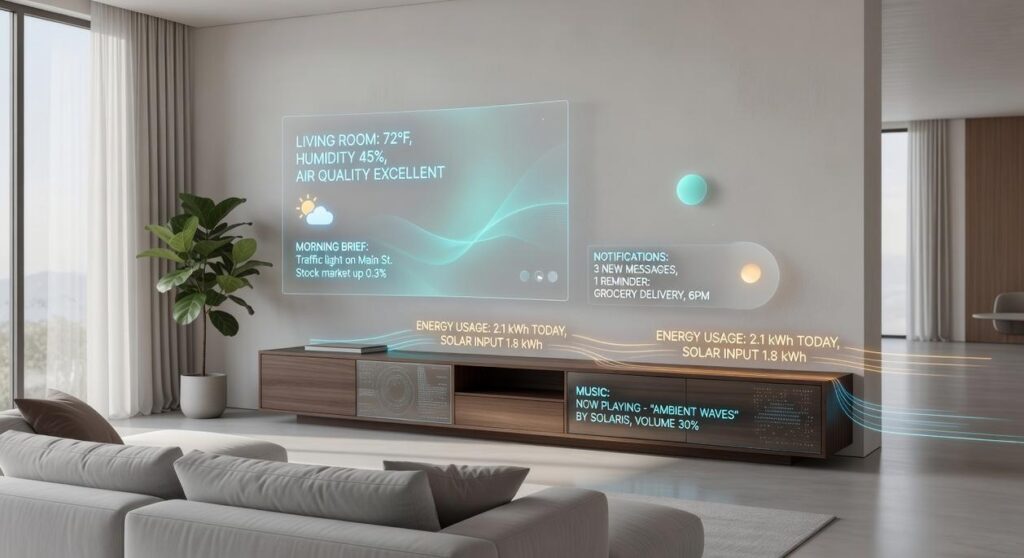
Enter a new wave of optimization focused on edge computing—a term that simply means processing data directly on the device instead of in the cloud. Think of it as doing the math in your pocket rather than outsourcing it to a warehouse-sized computer miles away.
At the heart of this shift is a lightweight operating system engineered to run complex workloads—like machine learning (ML) inference—on ultra-low-power chips. (ML inference is the stage where a trained model makes real-time decisions, such as recognizing a heartbeat anomaly or detecting motion.) Traditionally, that required powerful processors and constant connectivity. Now, streamlined processing frameworks reduce memory usage, compress models, and schedule tasks efficiently so devices sip power instead of gulping it.
Some skeptics argue cloud computing is already efficient enough. After all, hyperscale data centers optimize energy at massive scale (International Energy Agency, 2023). However, transmitting data wirelessly can consume more energy than local computation, especially for small, frequent tasks (IEEE Communications Surveys & Tutorials, 2020). In other words, smarter local processing often wins.
The implications are enormous. Industrial IoT sensors could operate for a decade on a single battery. Medical wearables can analyze vitals in real time without exposing sensitive data. Consumer devices become faster and more private.
This is why disruptive tech startups are racing toward edge-first architectures. Pro tip: when evaluating devices, look for on-device inference benchmarks, not just cloud features. That’s where the real efficiency revolution is happening.
The Foundational Layers of Next-Decade Technology
Why do some companies quietly shape the future while others dominate headlines for a season and fade? Have you ever wondered why the tools everyone depends on rarely make splashy news?
The pattern is clear: real, durable innovation happens at the foundational layers—computing architecture, encryption systems, and hardware efficiency. While flashy apps grab attention, it’s the infrastructure beneath them that defines what’s possible. (The plumbing isn’t glamorous, but try living without it.)
Foundational technology refers to the core systems that enable everything else to function—processors, data security frameworks, and optimized hardware-software integration.
When evaluating new solutions—even those from disruptive tech startups—ask yourself:
- How computationally efficient is it?
- What is the data security model?
- Can it perform under real-world constraints like latency or limited power?
Sound technical? It should be.
The next decade won’t be defined by prettier interfaces. It will be defined by stronger cores. The companies building those cores are setting the boundaries of tomorrow.
Take Control of Your Tech Future
You came here to make sense of the fast-moving world of tech innovation — from AI and machine learning to data encryption and device optimization. Now you have a clearer understanding of how these core computing concepts connect and why they matter in real-world applications.
The truth is, technology isn’t slowing down. disruptive tech startups are redefining industries overnight, AI models are evolving daily, and security threats are becoming more sophisticated. Falling behind doesn’t just mean missing opportunities — it means risking inefficiency, vulnerability, and lost competitive advantage.
The good news? You don’t have to navigate it alone. By staying informed, applying optimization techniques, and understanding how emerging technologies integrate into your systems, you position yourself ahead of the curve — not scrambling to catch up.
If you’re serious about mastering AI, strengthening your data security, and optimizing your devices for peak performance, now is the time to act. Explore deeper insights, apply what you’ve learned, and stay connected to trusted, forward-thinking tech guidance relied on by professionals who refuse to fall behind.
Don’t wait for disruption to force your hand. Take control of your tech future today.
 Founder & Chief Visionary Officer (CVO)
Selviana Vaelvessa writes the kind of device optimization techniques content that people actually send to each other. Not because it's flashy or controversial, but because it's the sort of thing where you read it and immediately think of three people who need to see it. Selviana has a talent for identifying the questions that a lot of people have but haven't quite figured out how to articulate yet — and then answering them properly.
They covers a lot of ground: Device Optimization Techniques, AI and Machine Learning Ideas, Data Encryption and Network Protocols, and plenty of adjacent territory that doesn't always get treated with the same seriousness. The consistency across all of it is a certain kind of respect for the reader. Selviana doesn't assume people are stupid, and they doesn't assume they know everything either. They writes for someone who is genuinely trying to figure something out — because that's usually who's actually reading. That assumption shapes everything from how they structures an explanation to how much background they includes before getting to the point.
Beyond the practical stuff, there's something in Selviana's writing that reflects a real investment in the subject — not performed enthusiasm, but the kind of sustained interest that produces insight over time. They has been paying attention to device optimization techniques long enough that they notices things a more casual observer would miss. That depth shows up in the work in ways that are hard to fake.
Founder & Chief Visionary Officer (CVO)
Selviana Vaelvessa writes the kind of device optimization techniques content that people actually send to each other. Not because it's flashy or controversial, but because it's the sort of thing where you read it and immediately think of three people who need to see it. Selviana has a talent for identifying the questions that a lot of people have but haven't quite figured out how to articulate yet — and then answering them properly.
They covers a lot of ground: Device Optimization Techniques, AI and Machine Learning Ideas, Data Encryption and Network Protocols, and plenty of adjacent territory that doesn't always get treated with the same seriousness. The consistency across all of it is a certain kind of respect for the reader. Selviana doesn't assume people are stupid, and they doesn't assume they know everything either. They writes for someone who is genuinely trying to figure something out — because that's usually who's actually reading. That assumption shapes everything from how they structures an explanation to how much background they includes before getting to the point.
Beyond the practical stuff, there's something in Selviana's writing that reflects a real investment in the subject — not performed enthusiasm, but the kind of sustained interest that produces insight over time. They has been paying attention to device optimization techniques long enough that they notices things a more casual observer would miss. That depth shows up in the work in ways that are hard to fake.